Keeping Kids Safer Online Without Spying on Them

It helps to be honest about what we’re really after. The goal of online safety is not to monitor a child until they turn eighteen and then release them, untrained, into an internet they’ve never learned to handle alone. The goal is to grow their judgment, a little more each year, until they can make good decisions when no one is looking — which, increasingly, no one will be. A surveillance-first approach gets this exactly backwards. It outsources judgment to an app and teaches kids that safety is something done to them rather than a skill they own. The communication-first approach, by contrast, builds the internal compass that keeps them safe long after they’ve outgrown any parental control. One produces dependence and evasion. The other produces competence.


Passwords Aren’t Enough Anymore: A Plain Guide to MFA

For thirty years, the password did all the work. One secret string stood between your private life and anyone who wanted in. That model made sense when you had two or three accounts and hackers were hobbyists. It makes no sense now, when the average person juggles dozens of logins and attackers run automated programs that test millions of stolen passwords a day against every site they can find. The password did not get weaker. The world around it got far more hostile. Multi-factor authentication is how you adapt — and the good news is that it is one of the rare security upgrades that is both genuinely effective and genuinely easy to set up.

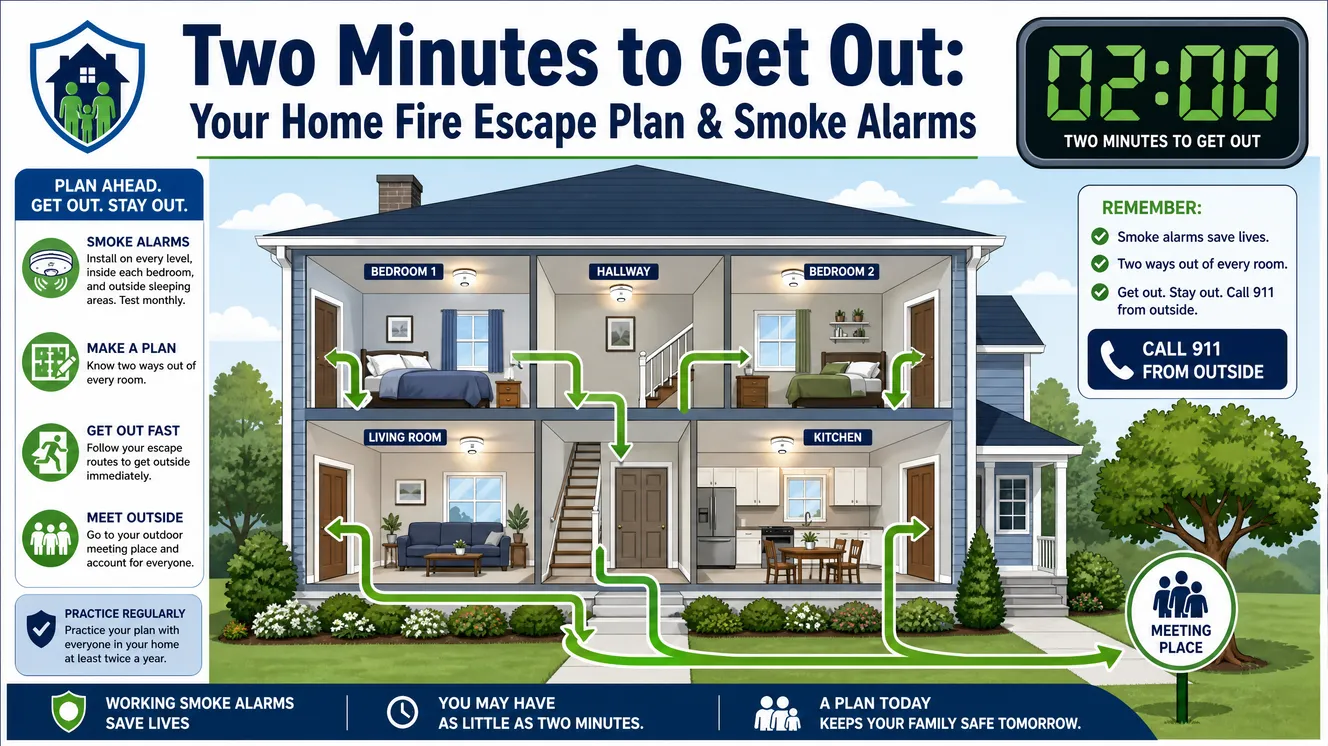
Two Minutes to Get Out: Your Home Fire Escape Plan & Smoke Alarms

There is a comforting lie a lot of us tell ourselves: that in an emergency, instinct will take over and we will simply know what to do. Fire does not reward that kind of optimism. Smoke is disorienting. It is black, it is hot, and within a minute or two it fills a room from the ceiling down, stealing your light and your air at the same time. People who survive house fires almost never describe a calm, clear-headed escape. They describe crawling, counting doorways with their hands, and being grateful they had walked the route before, on an ordinary afternoon, when they could still see. That rehearsal is the difference. It is also free.